The Nomad’s Guide to Meditation: Finding Stillness on the Move
Imagine this: you’ve just landed in a new city, your backpack still smells faintly of the airport, your laptop is buzzing with notifications, and your mind is a tangle of deadlines, emails, and wonder at the new place around you. As a digital nomad or remote worker, life is full of adventure, but it’s also full of mental clutter. That’s where meditation steps in—not as a rigid practice, but as a portable sanctuary you can carry anywhere.
I’ve spent decades guiding people from bustling cities to remote islands, from high-rise apartments to desert campsites, teaching them how to slow down without stopping. Here’s your guide to meditating as a nomad, including a deep dive into how it differs from hypnosis, and how both can serve you on your journey.
Ready to turn any corner of the world into your personal chill zone? In this blog, you’ll learn how to meditate on the move, from sunrise cliffside sessions to quick midday resets between Zoom calls. We’ll also demystify the difference between meditation and hypnosis, so you know exactly when to pause and when to program your mind. Stick around till the end and grab a cheatsheet—a little gift from us to help you carry your calm wherever your adventure takes you.
Why Meditation Matters for Nomads
Being constantly on the move can feel exhilarating—but it can also scatter your mind. Meditation isn’t about sitting cross-legged for hours in silence (unless you want it to be). It’s about training your mind to notice, pause, and recalibrate.
For remote workers, meditation helps:
Reduce stress from jet lag, time zone shifts, and work deadlines.
Improve focus during online meetings, coding sprints, or creative sessions.
Boost creativity by giving your subconscious room to breathe.
Ground yourself in unfamiliar places so you feel at home anywhere.
Think of meditation as your internal Wi-Fi: it strengthens your connection to yourself, even if the local internet is patchy.
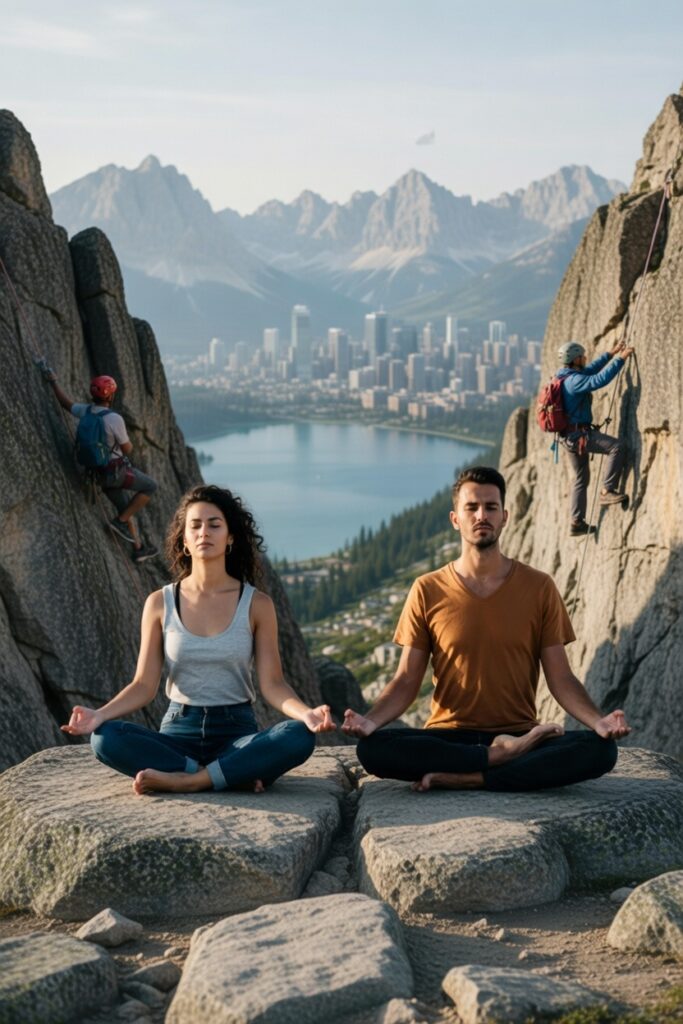
Generated by Grok video
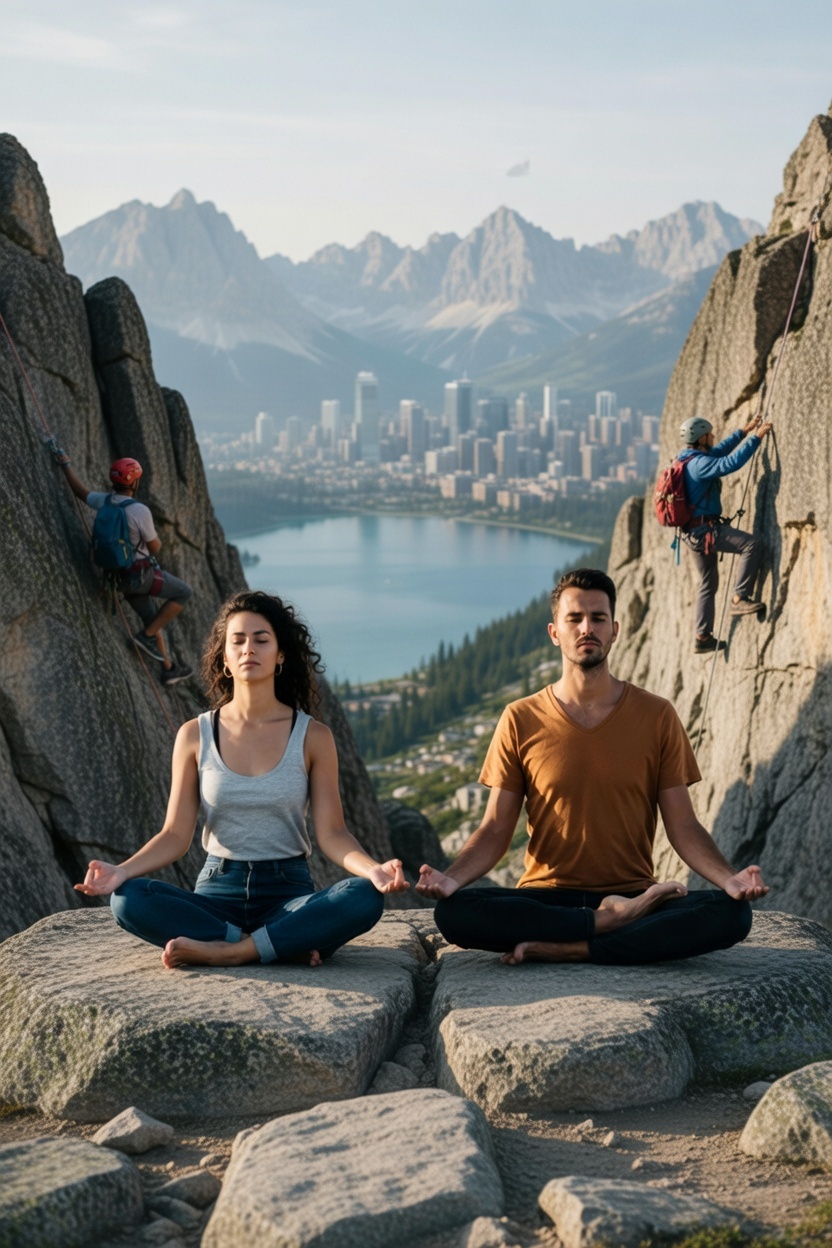
“Just like climbing a mountain, meditation isn’t about reaching the top—it’s about feeling each step, steadying your breath, and being fully present on the ascent.”
How to Meditate Anywhere: A Step-by-Step Nomad Approach
1. Find Your Spot—Even if Temporary
Your meditation spot doesn’t have to be perfect. A quiet corner of a hostel, a bench in a park, or even your airplane seat works. The key is consistency over comfort. Your mind will learn to associate this space—or even just a few minutes each day—with calm.
2. Choose Your Anchor
Breath: Focus on your inhale and exhale. Feel the air move through your body.
Body scan: Slowly notice sensations in your feet, legs, torso, arms, and head.
Mantra or word: Repeat a word or phrase that centers you, like “peace” or “I am here.”
3. Start Small
Even 3–5 minutes counts. The first few sessions may feel like your mind is sprinting on a treadmill—thoughts bouncing from “what’s for lunch” to “did I send that email?” That’s normal. Meditation trains your awareness, not your silence.
4. Embrace Movement Meditation
For nomads, sometimes walking meditation works better than sitting. Feel your feet on the earth, the rhythm of each step, your senses engaged with the environment around you. You’ll notice a shift in focus almost immediately.
5. Use Technology Wisely
Apps like guided meditation recordings, nature soundtracks, or simple timers can help, especially if your surroundings are unpredictable. But don’t let the device become a distraction—treat it like a tool, not a crutch.
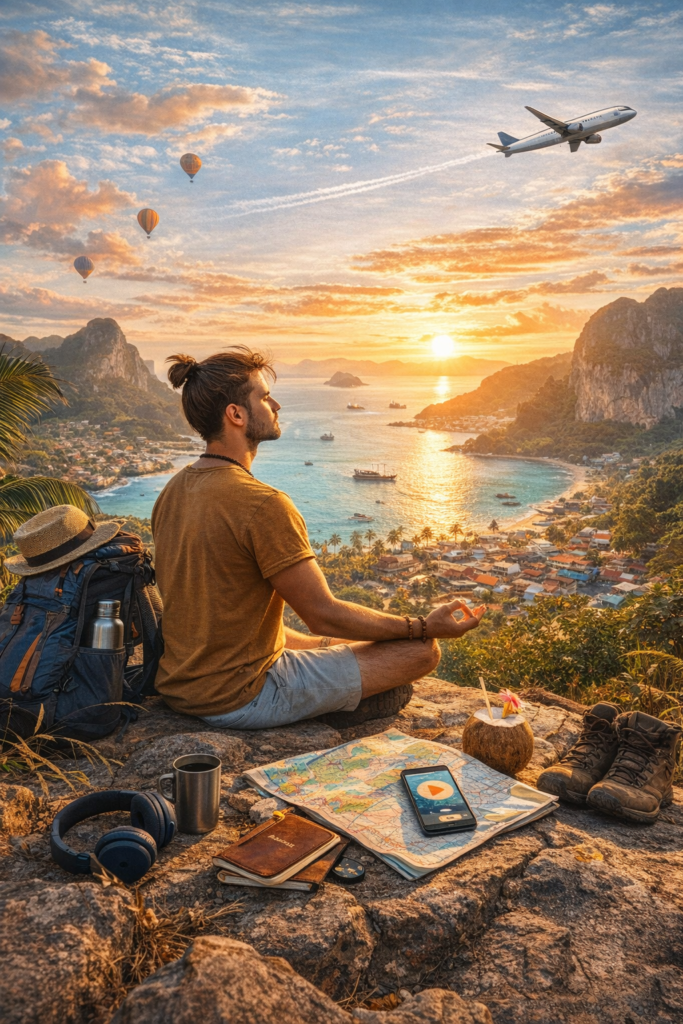
Pic: ChatGPT Generated
Meditation vs. Hypnosis: What’s the Difference?
Have you ever thought – but isn’t meditation like hypnosis? Many people confuse meditation with hypnosis because both involve altered states of consciousness. Here’s the distinction:
| Meditation | Hypnosis |
|---|---|
| You are fully aware and present. | Your conscious mind is relaxed while a hypnotist or recording guides your subconscious. |
| The goal is mindfulness, clarity, and inner observation. | The goal is suggestion, behavior change, or accessing subconscious patterns. |
| You can do it anywhere, anytime, alone. | Usually guided by a professional or recording, though self-hypnosis is possible. |
| Best for reducing stress, increasing focus, cultivating awareness. | Best for habit change, overcoming fears, deep relaxation, or performance enhancement. |
Think of meditation as training your mind and hypnosis as programming it. Both are powerful tools, but meditation builds resilience and presence from the inside out, which is especially valuable when you’re adapting to new environments every week.
Story from the Road
I once guided a group of remote workers on a tiny Indonesian island. They were scattered, overwhelmed by work and new surroundings, some exhausted by travel. I asked them to take just five minutes each morning, sitting on the sandy porch, noticing the ocean waves and their own breath.
By the end of the week, one participant said:
“I didn’t realize how much noise was in my head until I sat still. Now, even in a busy café, I feel calmer. I’m noticing things I never did before.”
That’s the gift of meditation on the move. It’s portable, subtle, and profoundly stabilizing.
Quick Nomad Meditation Routine
1. Morning Reset (5–10 min): Sit, breathe, or do a body scan before your day starts.
2. Midday Recharge (3–5 min): Close your eyes, stretch, and focus on your breath after a long meeting or travel session.
3. Evening Release (5–10 min): Reflect, let go of thoughts, and thank yourself for the day before sleep.
Optional: Walking meditation when exploring new cities or beaches.
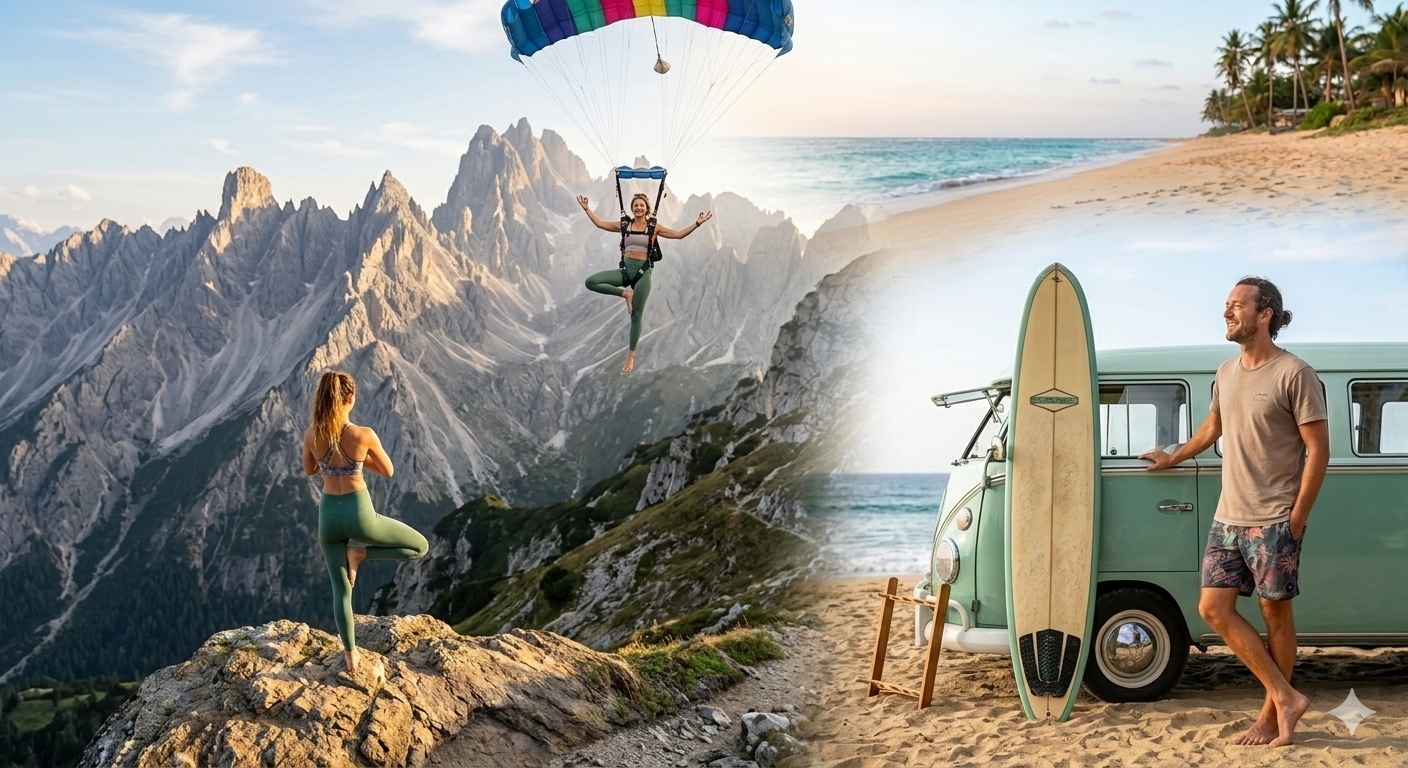
Pic generated by Gemini
Final Reflection
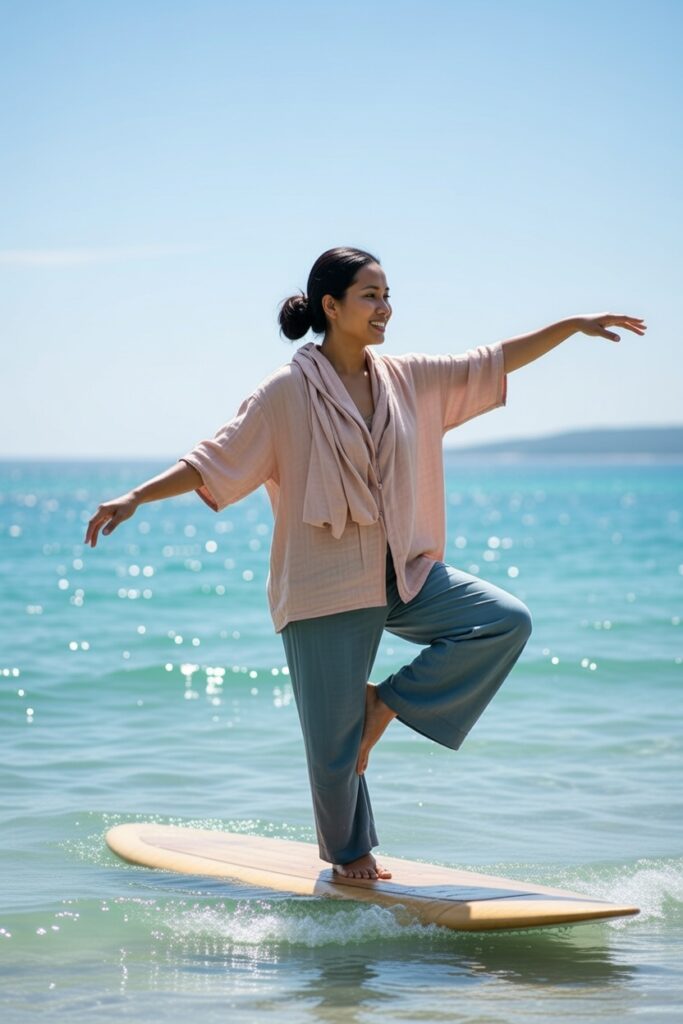
Being a digital nomad is like surfing—constantly moving, sometimes chaotic, always beautiful. Meditation is your surfboard. It doesn’t stop the waves, but it keeps you balanced and aware so you can ride them with grace.
Start today, even for five minutes. Your mind will thank you, your creativity will thank you, and your future self will thank you for carrying a little sanctuary wherever you go.
Created for you by nomads for nomads. Love Linda!
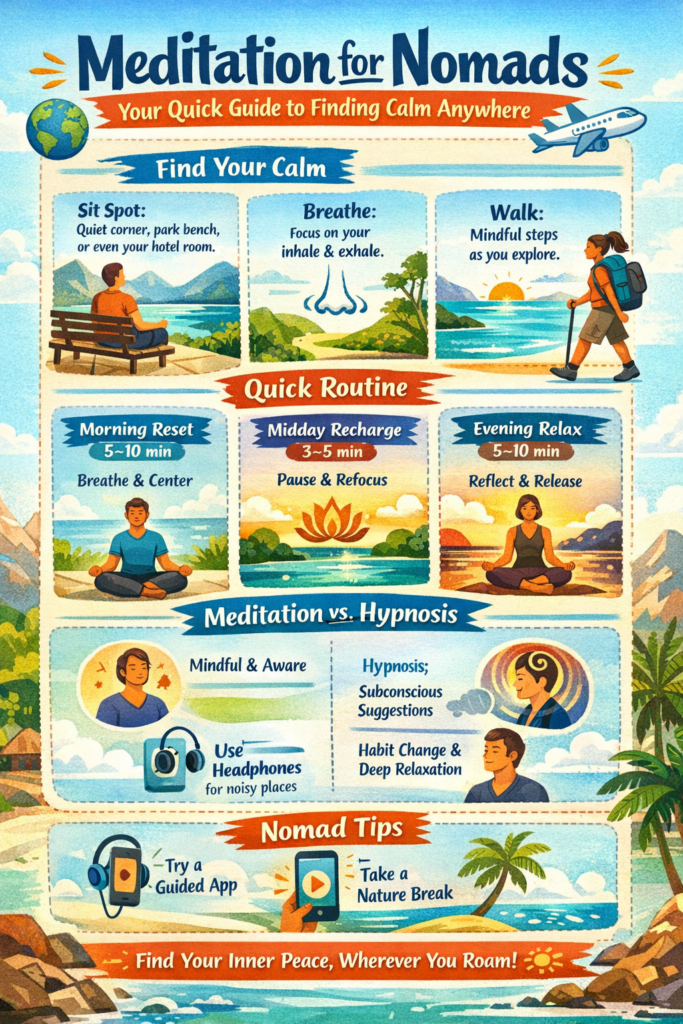
Our gift for you! A Cheat Sheet





Pingback: The Nomad’s Guide to Meditation: Finding Stillness on the Move - Planet Nomad News